OICO
(2026)
A smart TV ecosystem designed for individuals living in small, multi-purpose apartments. It offers environmental and social features that adapt to the changing daily needs of small-space inhabitants, featuring customizable ambient “scenes” and social tools like remote co-watching. The physical ecosystem includes a TV stick, a remote control, and a webcam, alongside a dedicated line of smart home accessories.
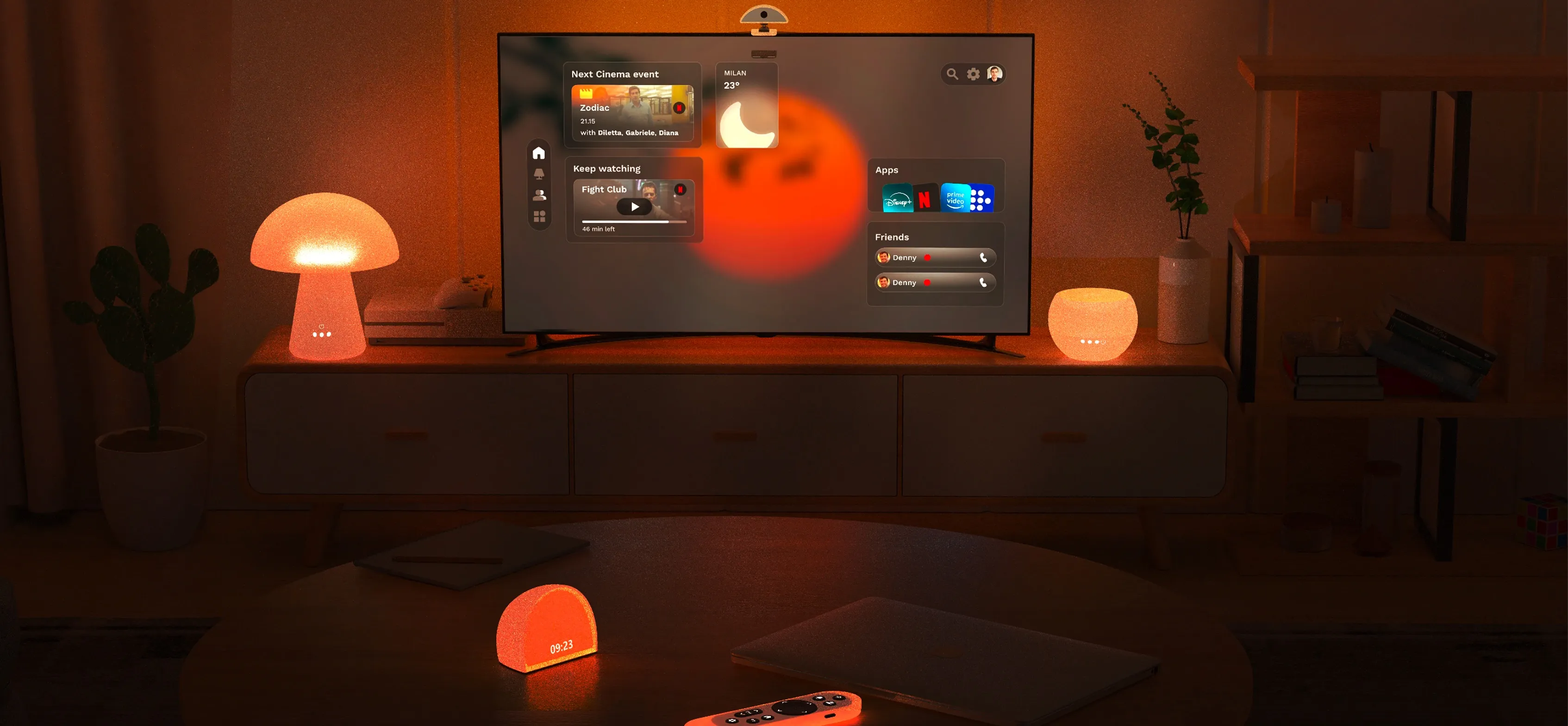
Remote workers in small apartments struggle to separate work and rest as they happen in the same environment, along with persistent isolation.
However, their home’s biggest screens — TVs — remain passive.
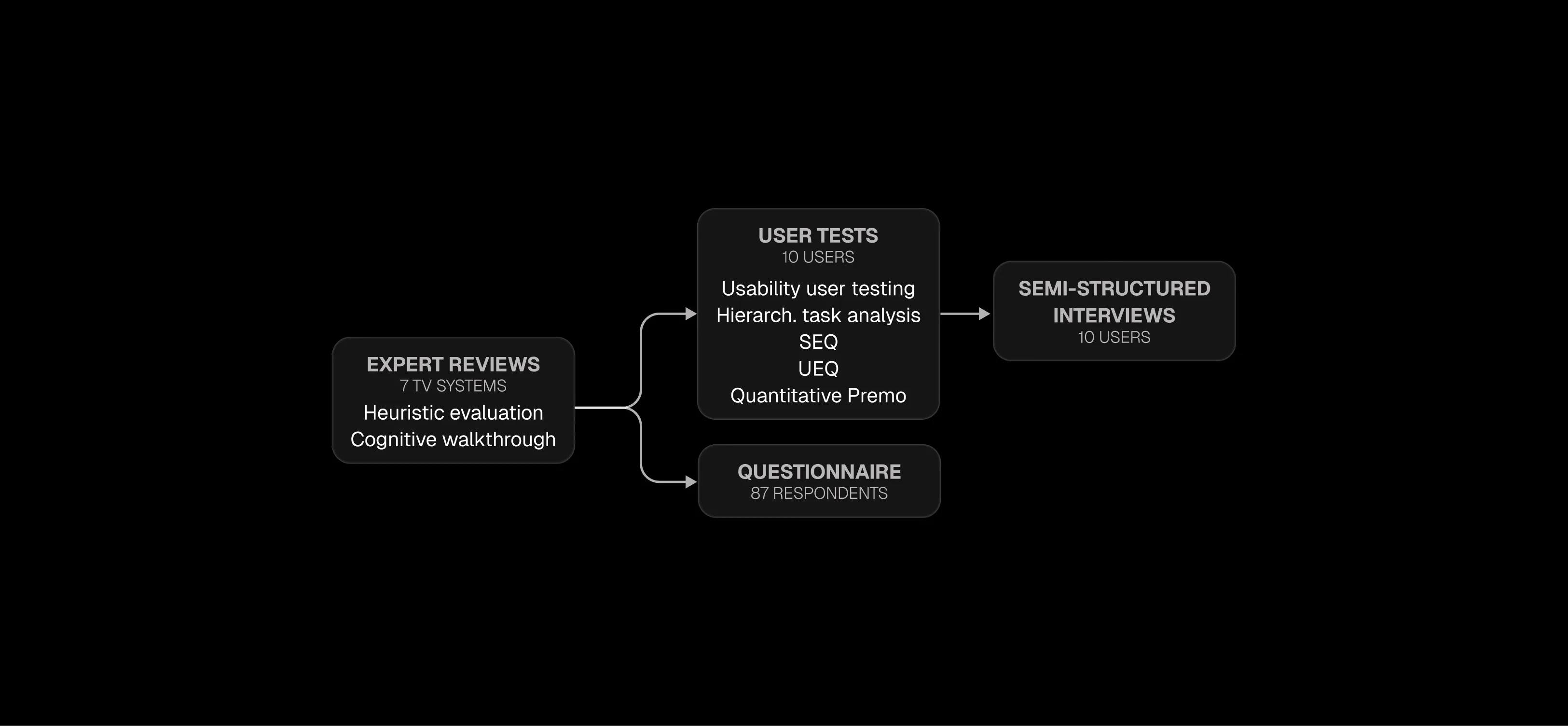
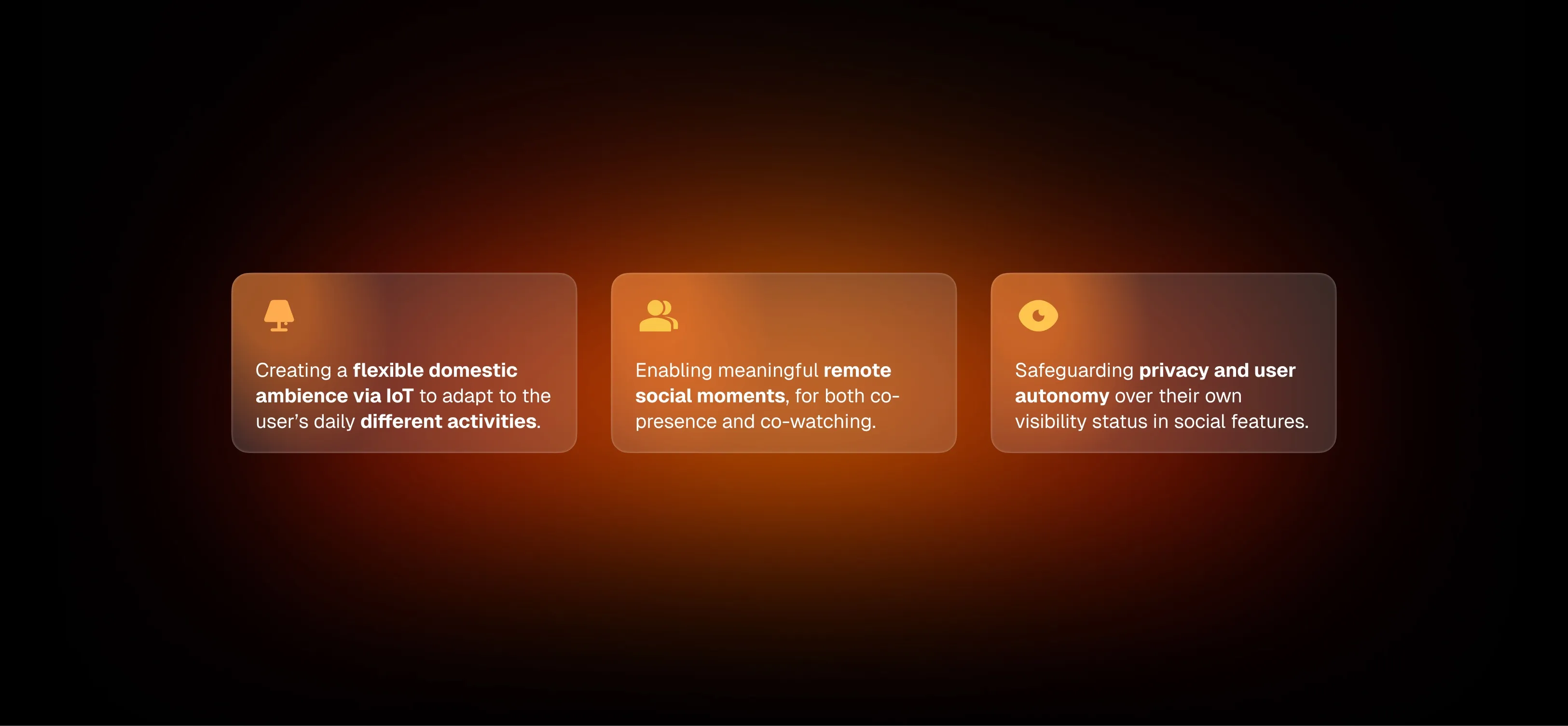
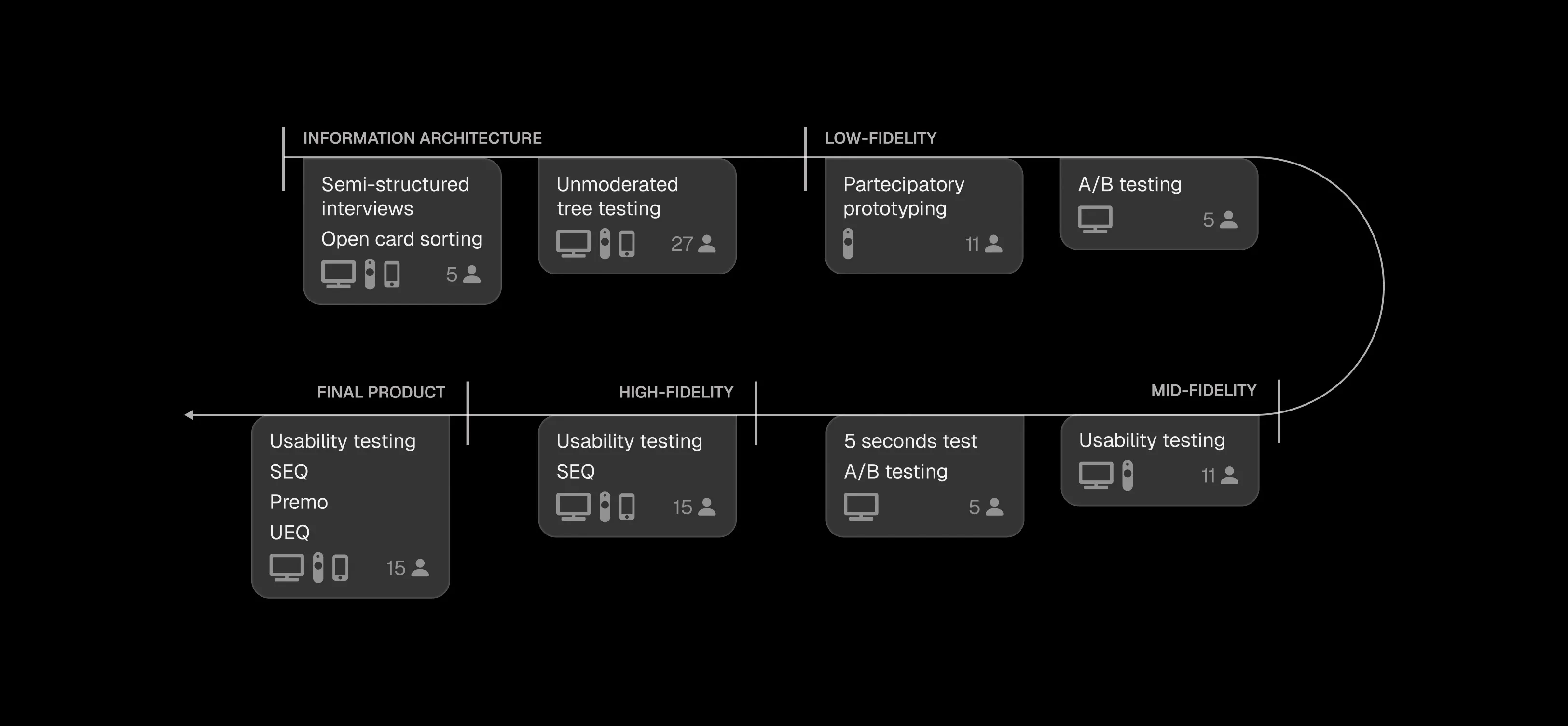
In order to discover weaknesses of current TV ecosystems and related unmet needs of solo-resident, we conducted a preliminary research process. First, we conducted expert reviews of existing TVs, a questionnaire about TV habits, and user test sessions followed by semi-structured interviews. We discovered that solo dwellers want a more flexible home environment to separate their different daily moments, desire a natural co-presence feeling to avoid isolation, but want to be able to control their visibility status to keep their independence.
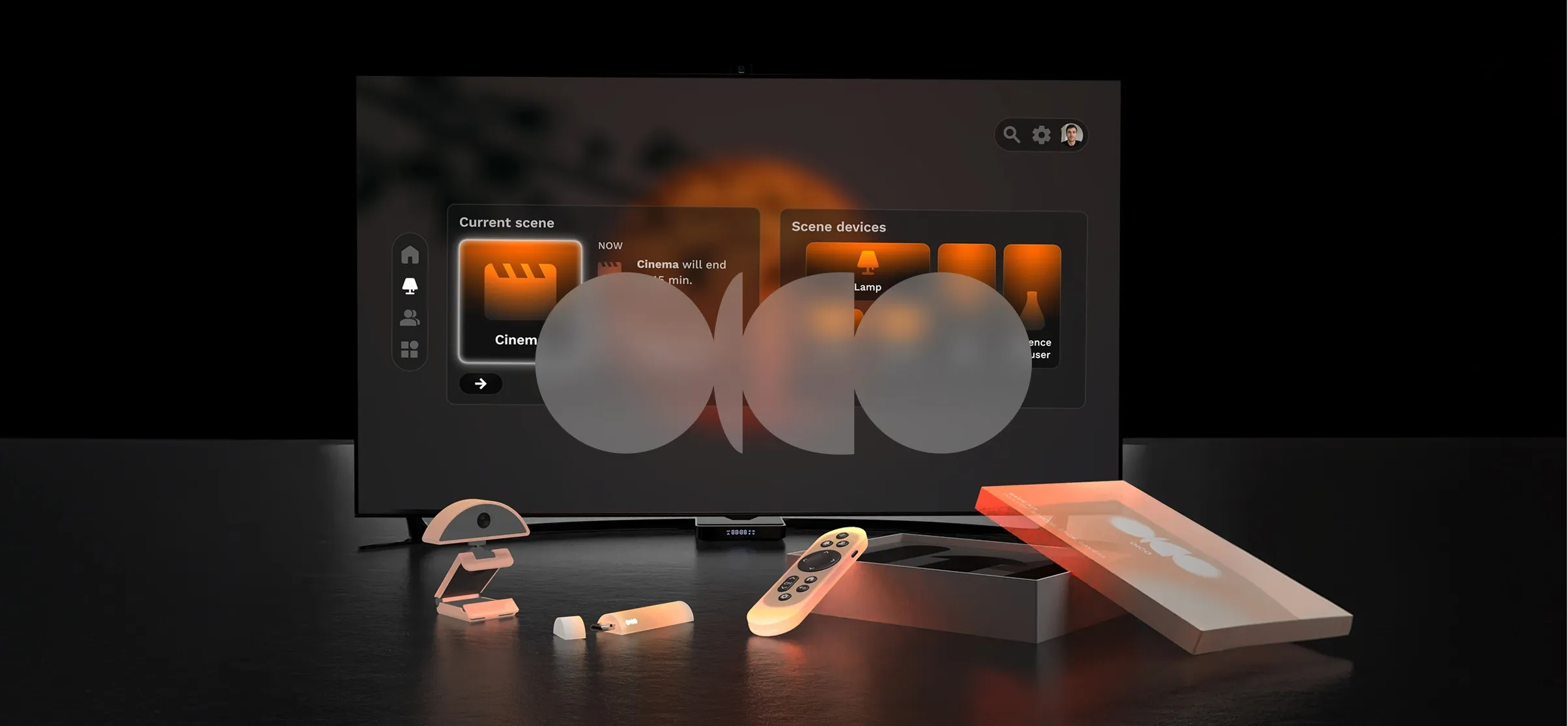
Our solution to meet these needs is Oico, an integrated IoT ecosystem that enables low-friction shared moments while dynamically altering the TV and room environment to support users’ daily activities. In order to do that, the system is highly flexible and customizable and includes ambient and social features. To adapt to different daily needs, users can create ambient "scenes" (e.g. Work or Cinema) which can be automated.
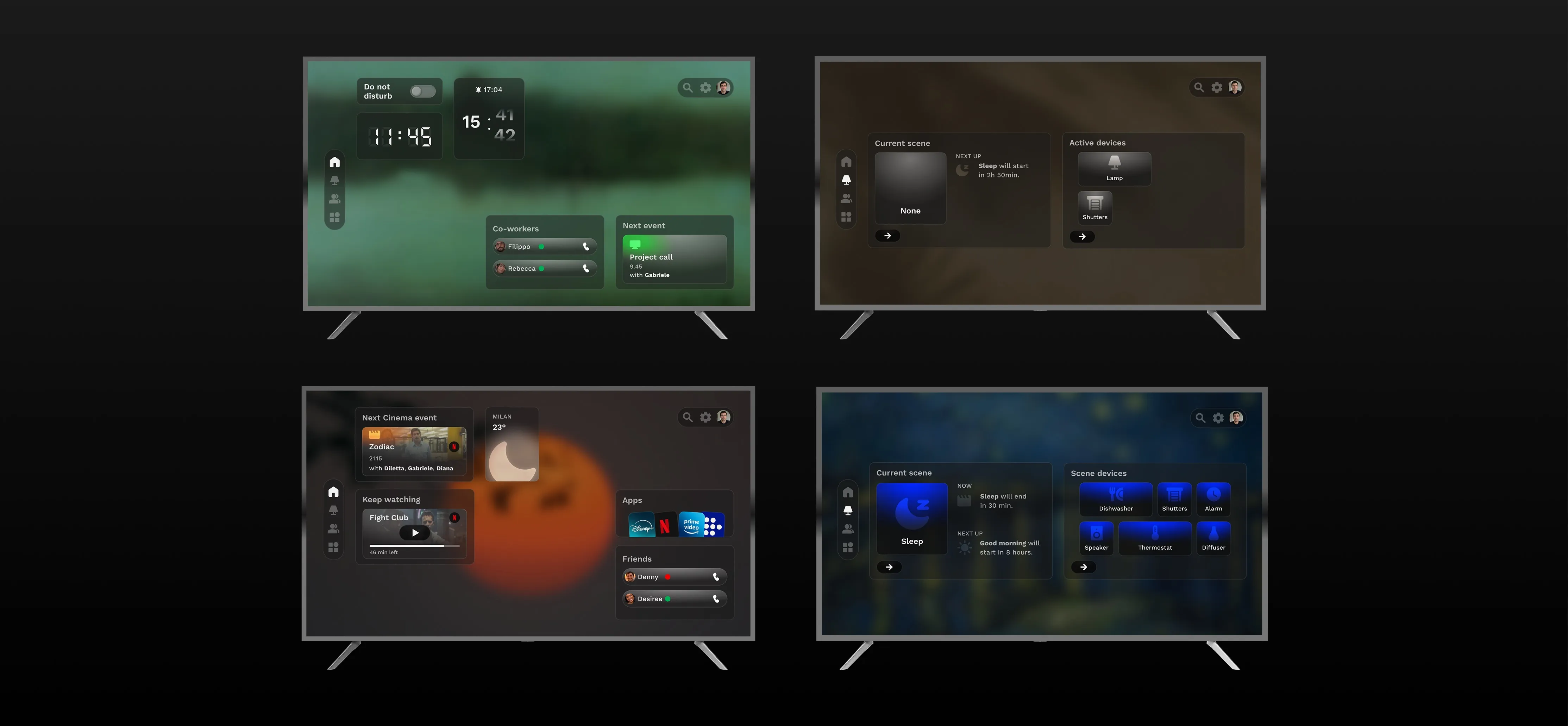
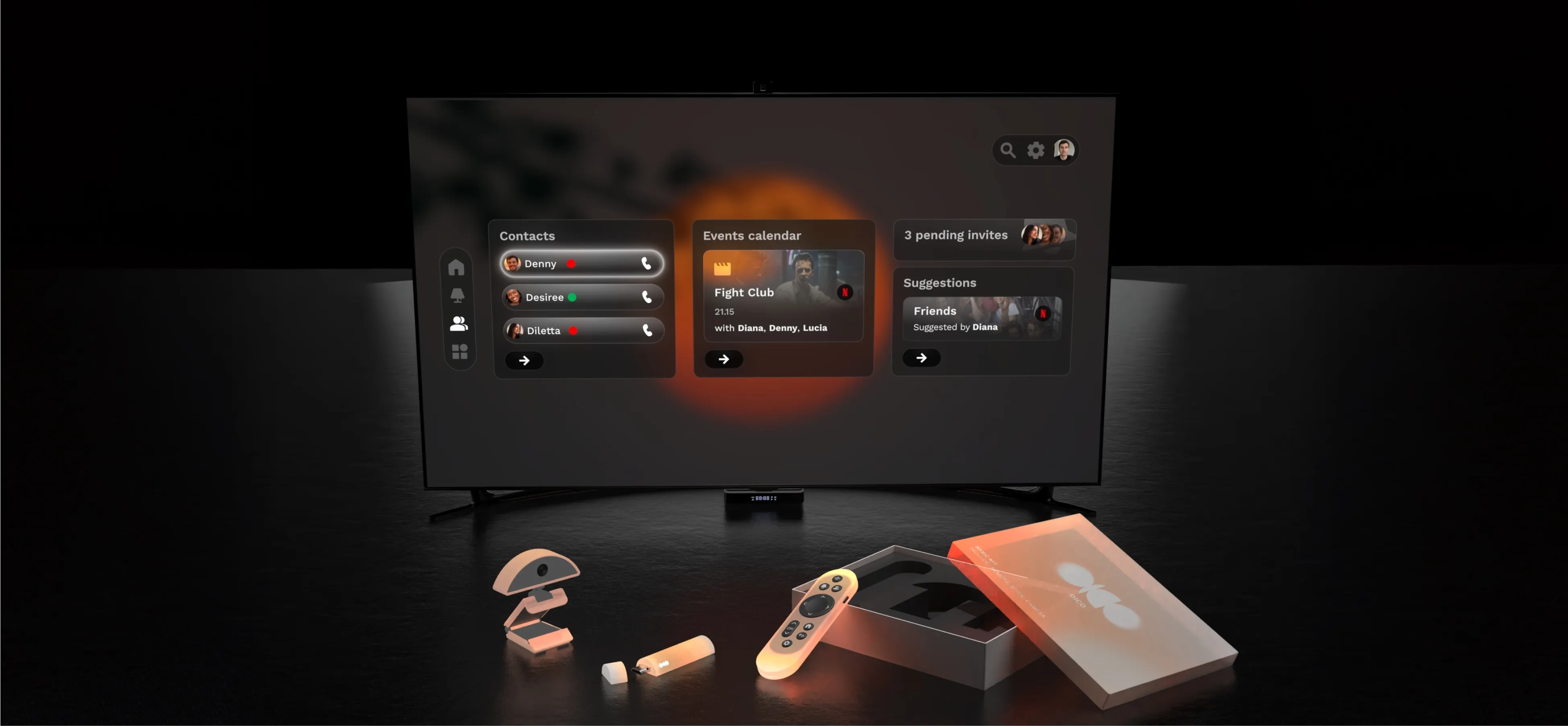
The home dashboard is highly flexible and adapts its color palette, wallpaper, and widgets based on the active Scene. For example, during working hours, the user can view productivity-related widgets, which will change when an entertainment-focused scene is on.
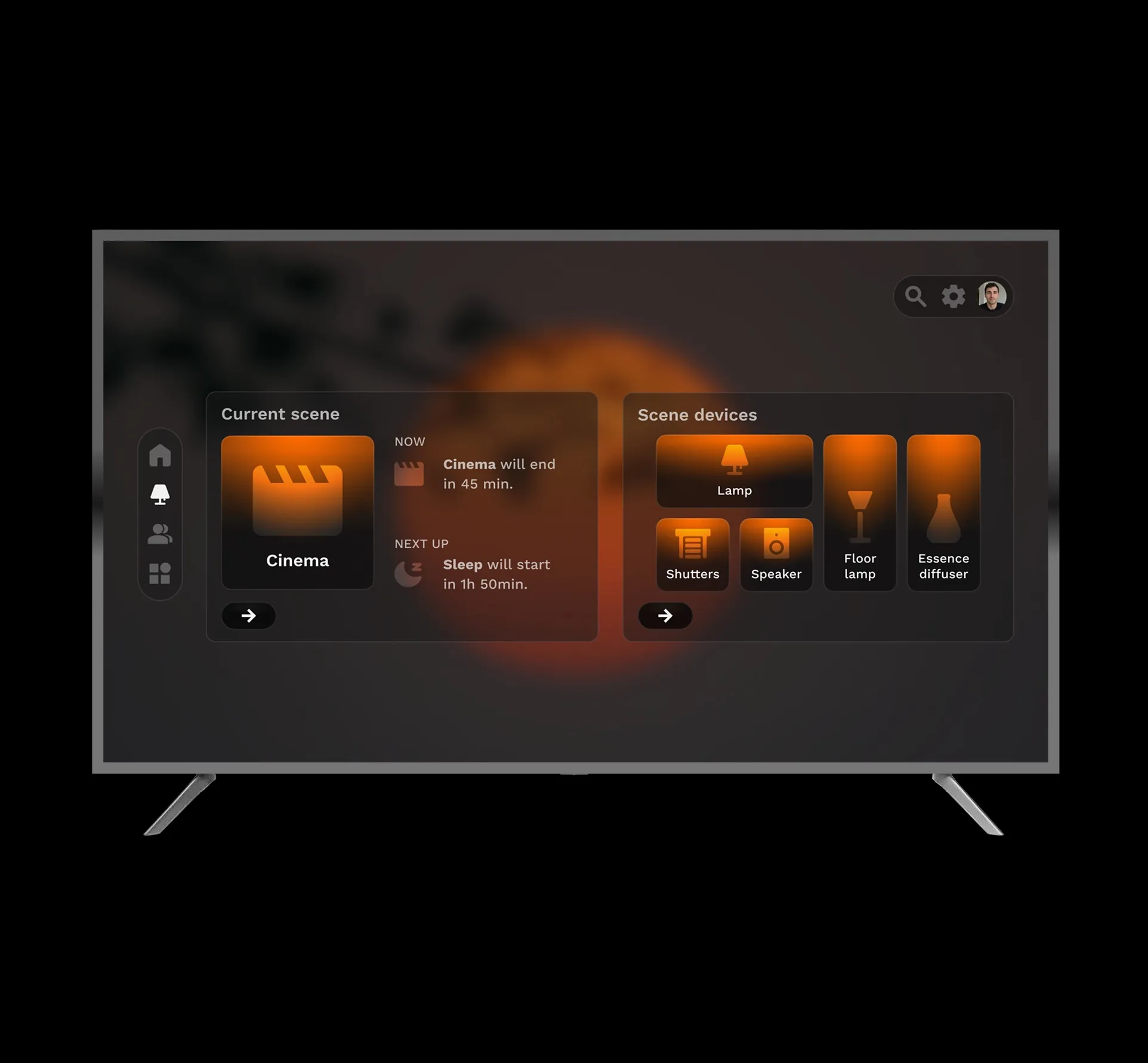
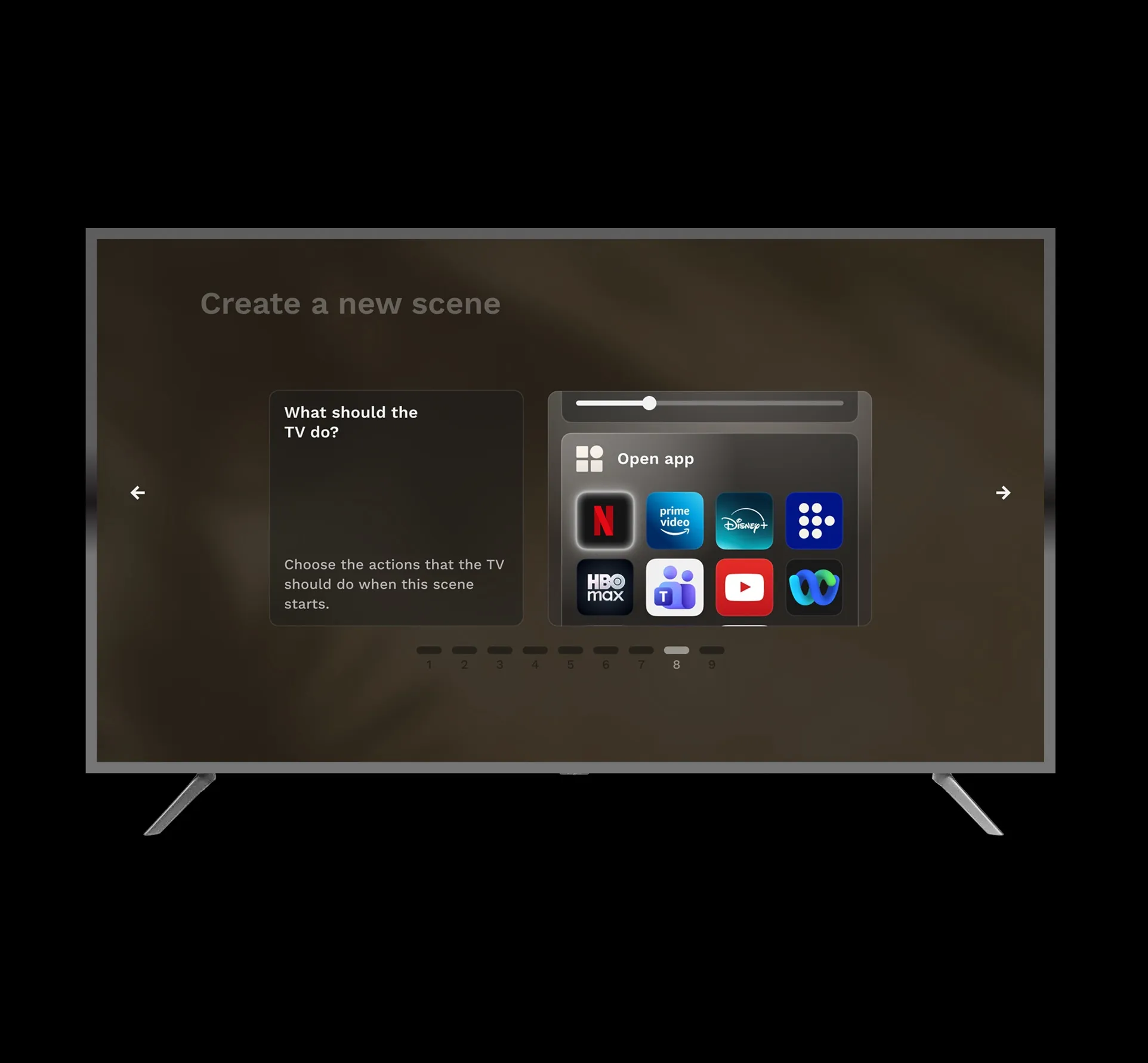
Ambient feautures automate the room’s atmosphere through customizable “Scenes” (e.g. Work, Cinema, Relax) to adapt to the user’s current activity. The scene creation process makes the user choose which smart home devices to include, how they behave, which widgets to view on the TV when that specific scene is active.
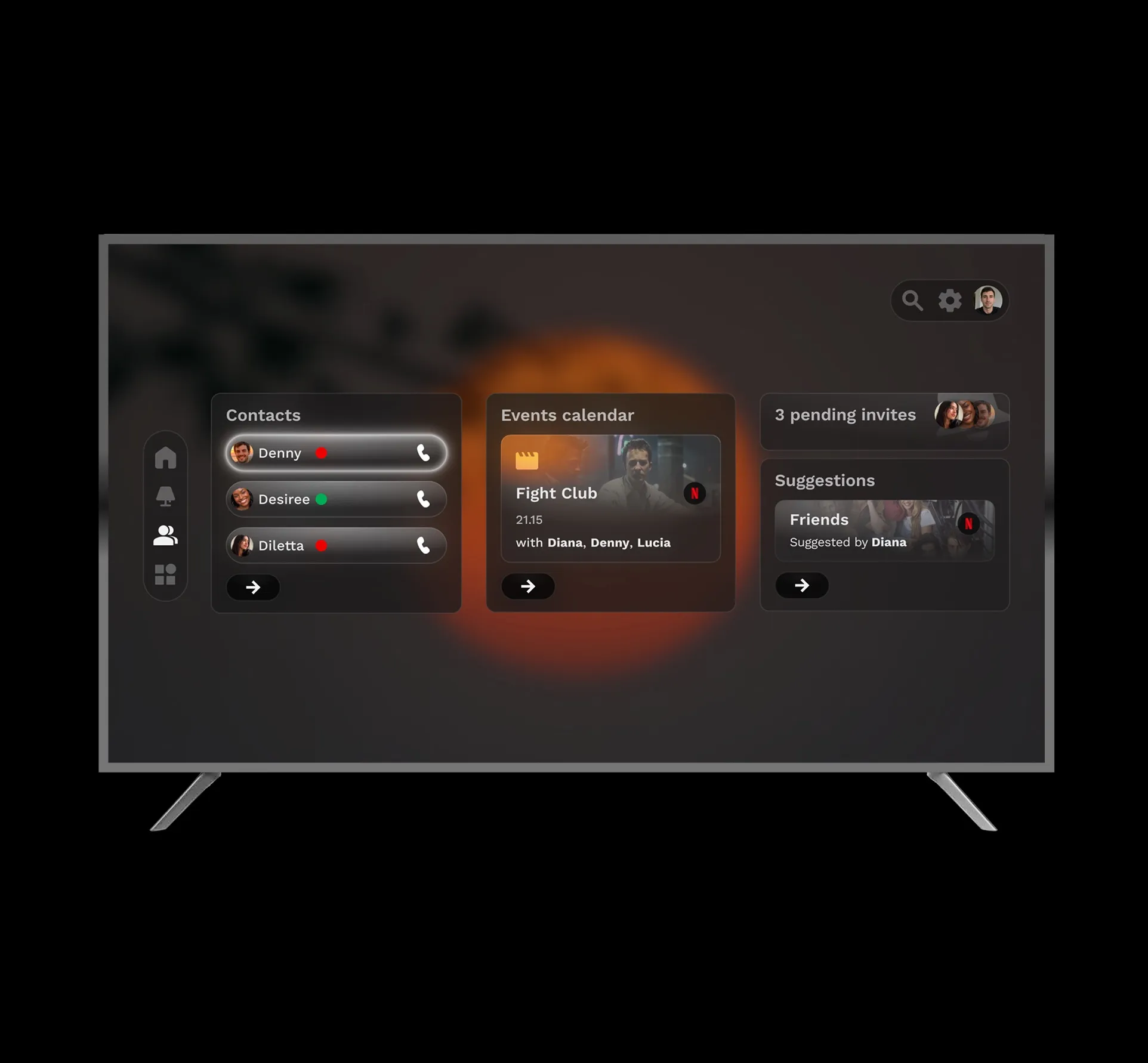
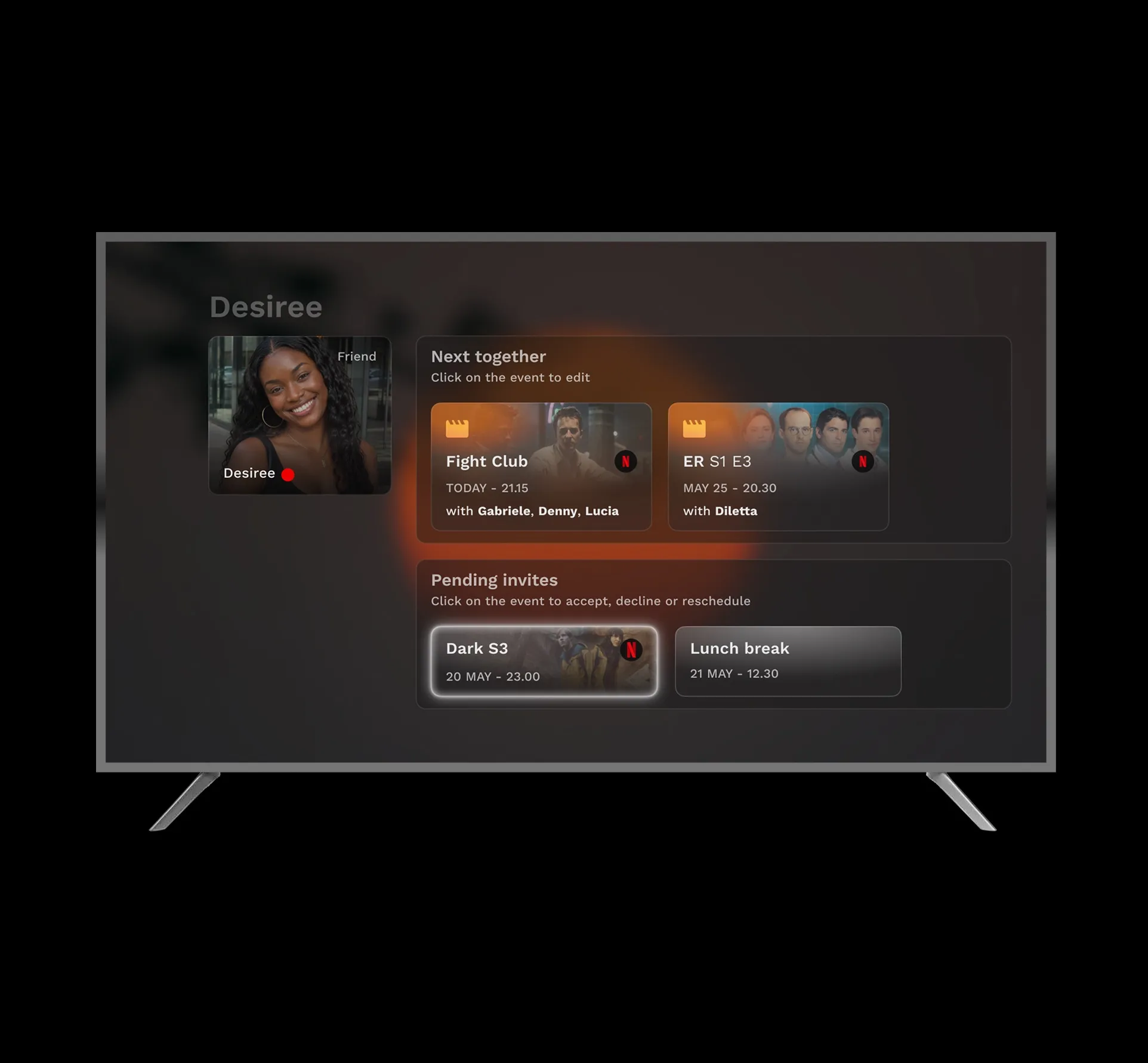
Social features enable natural co-presence and synchronized co-watching. Users can invite their friends to co-watch a movie, but also do video-calls on the big screen to feel each other's company in a natural way, without holding any device.
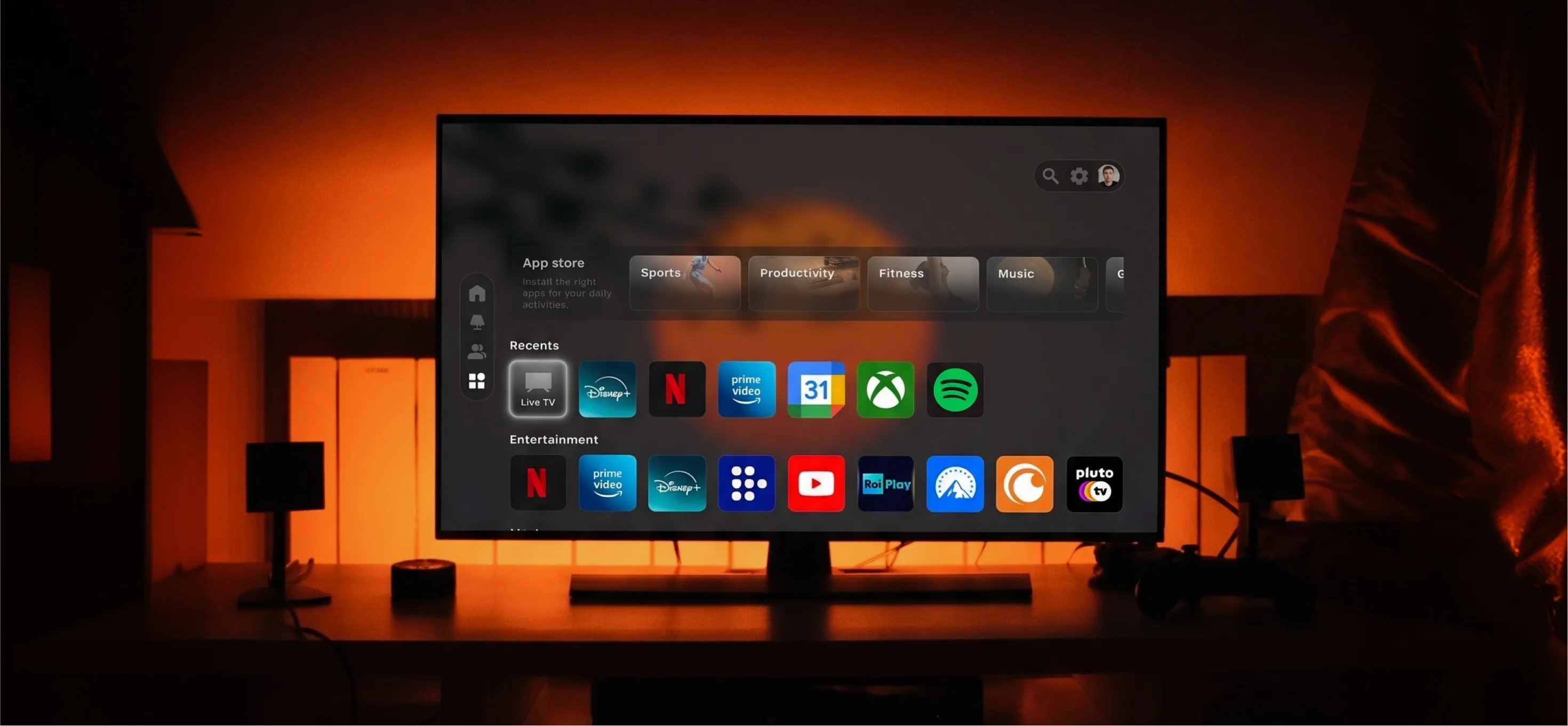
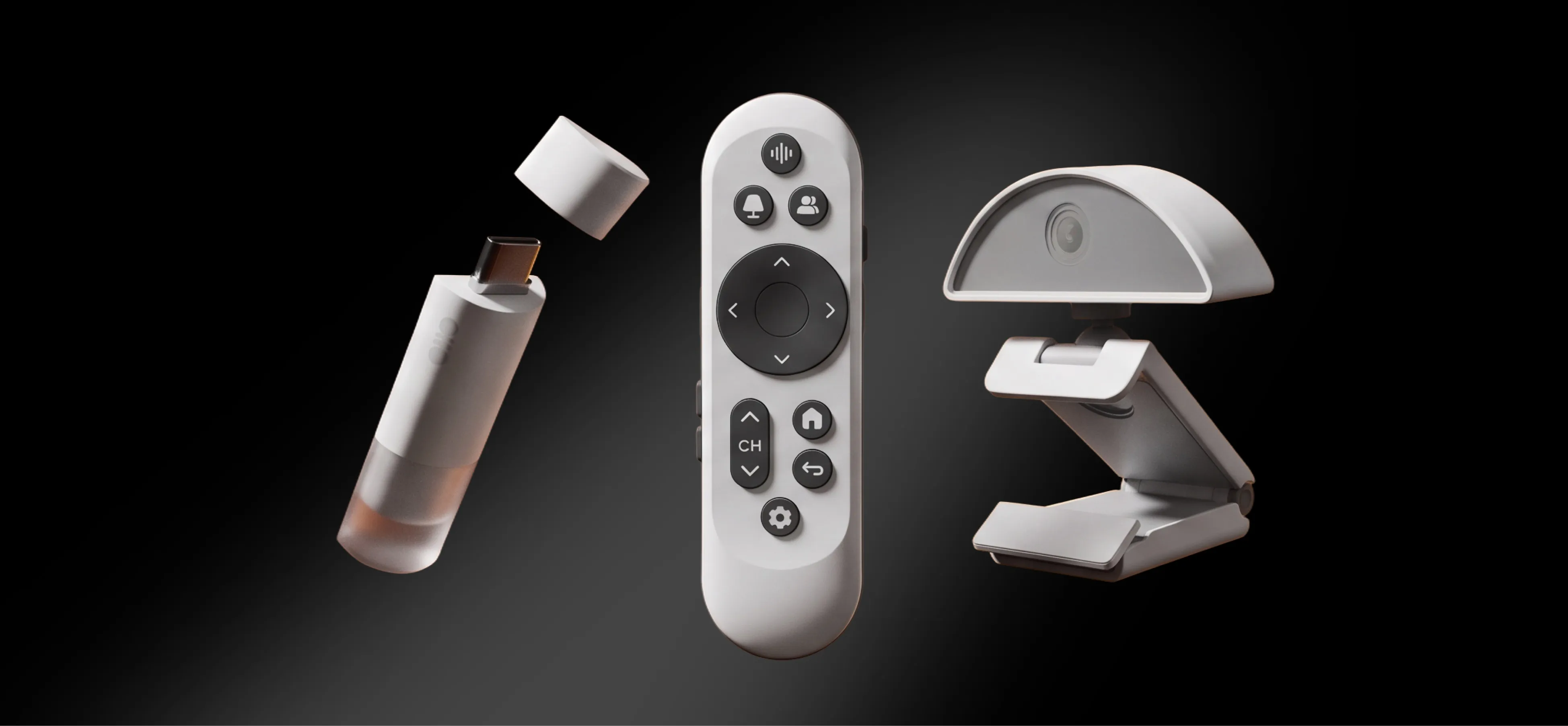

To enable the connectivity with non-native systems, Oico comes in a kit consisting of a stick, a camera with a tilt-back privacy hinge, and a remote, featuring a trackpad and quick shortcuts to ambient and social features. The kit can also be expanded with the additional smart devices, that can be bought directly on the online store and added to existing or new ambient scenes.
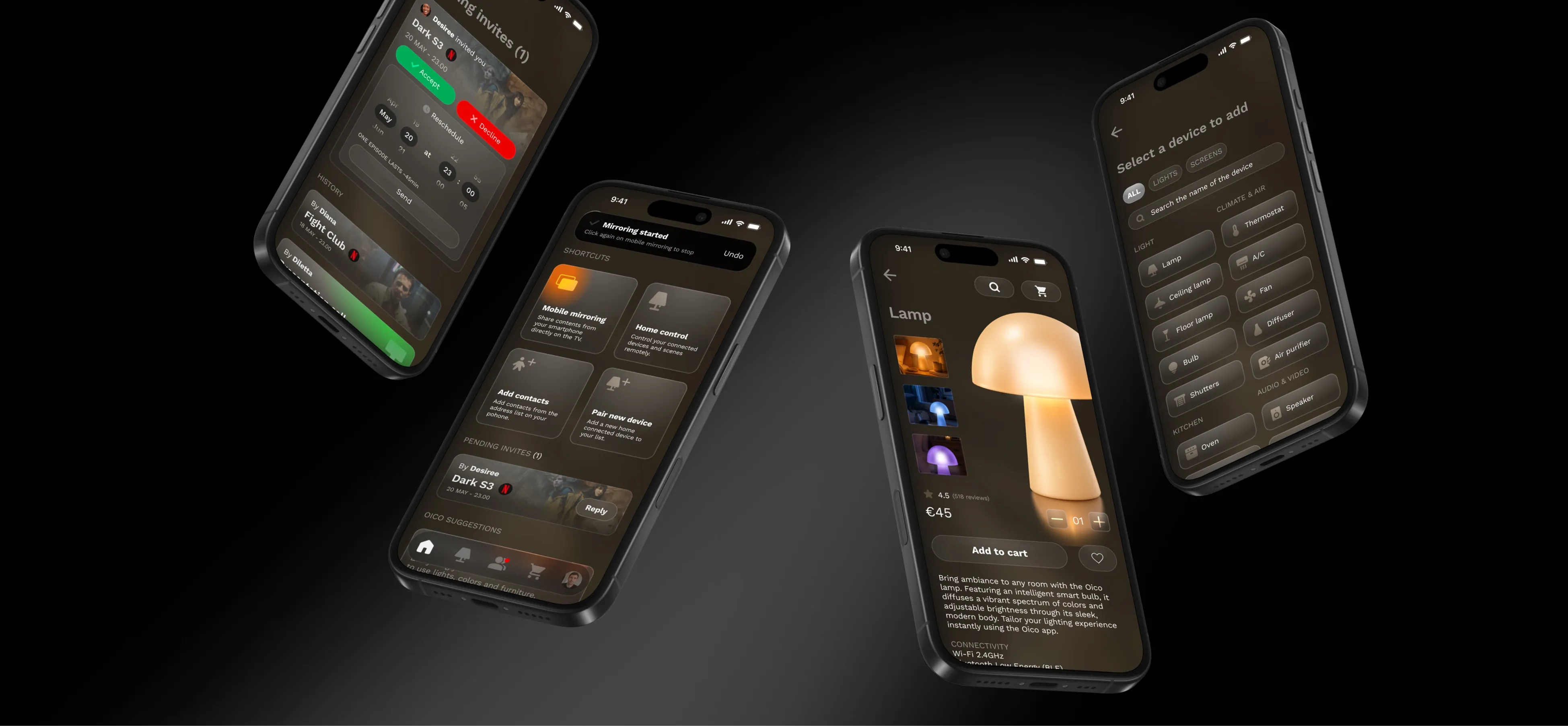

In order to bypass on-screen TV typing — one of the main pain points of TVs — a companion app was made. It streamlines the onboarding, contact setup, invitation management, and online store to buy other Oico products.
Key learnings
Mixed-method UX research & synthesis;
Advanced component architecture & Figma prototyping;
Moderated usability testing & user facilitation;
Design system consistency & accessibility principles
Additional credits
Diletta B. Canè, Lucia Guan, Vittorio Paltrinieri, Denny Shu